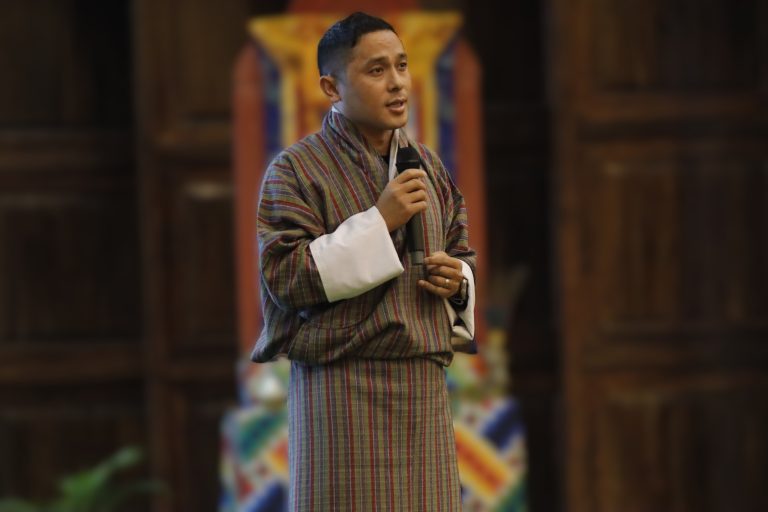
Day 2 of the Idea Development sessions marked a clear transition from identifying problems to shaping meaningful ideas. Across the venue, participants were deeply engaged in refining the challenges identified on Day 1 and translating them into structured, solution-oriented concepts aligned with the transformation agenda of the Royal University of Bhutan.The day was intense, focused, and highly productive, reflecting a shared commitment to improving the University through thoughtful innovation.
From my observation in classroom IT-02, where eight groups worked on eight different ideas, the level of seriousness and collaboration was immediately evident. Groups were actively debating, questioning assumptions, and refining their thinking to bring clarity and substance to their ideas. A particularly motivating moment for our class was the visit of the Dasho Vice Chancellor, who took time to listen to some of the ideas being developed. His presence added a strong sense of purpose and validation, reinforcing that these discussions were not just academic exercises, but potential contributions to real institutional change.
One of the most impactful elements of was the World Café session. This format allowed each group to present their ideas to participants from other groups and receive honest feedback, questions, and suggestions. Watching ideas evolve through these interactions was powerful, many concepts became sharper and more grounded as a result of peer input. The World Café highlighted the importance of sharing, listening, and collective refinement in the idea development process. Although I did not personally observe other classrooms, the energy and engagement in IT-02 suggested that similar momentum was present elsewhere. By the end of the day, it was clear that structured ideation, peer feedback, and leadership engagement together created an environment where collaboration truly turned problems into impactful ideas.
– Mr. Ugyen Dorji, College of Natural Resources