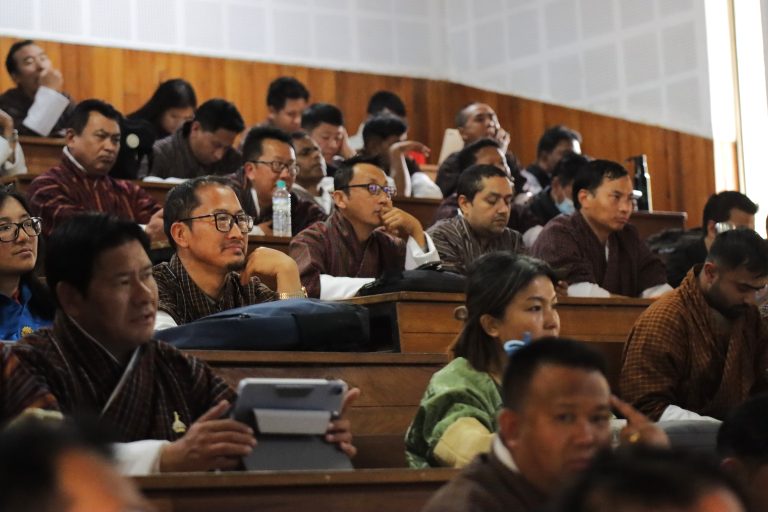
Beyond the academic engagement and the strong sense of “One RUB,” participants reflected positively on the overall experience of the Annual Faculty Meet, both within and beyond the formal discussion spaces. The programme created an environment that supported intellectual exchange while also fostering comfort, connection, and a sense of belonging. Many participants noted that the experience outside the classrooms played a significant role in shaping their engagement throughout the summit.
The Welcome Night, in particular, left a lasting impression. Thoughtful lighting, seating arrangements, and the overall ambience generated excitement and anticipation about meeting new roommates and discovering what lay ahead in the days to follow. Any initial apprehension about interacting with unfamiliar colleagues or returning to hostel life quickly faded as participants settled in. Although the request to bring personal plates and mugs initially met with some speculation, the facilities and organisation soon exceeded participants’ expectations. Clean and well-maintained amenities, including a continuous water supply, toiletries, and attention to hygiene, contributed significantly to participants’ comfort and ease.
Food emerged as one of the most appreciated aspects of the AFM. Meals consistently surpassed expectations, a sentiment vividly reflected during the screening of a media compilation video, where the loudest cheers erupted when the cooks appeared on screen which was an acknowledgement of their crucial role in the programme’s success. Participants from various colleges also remarked that the hosts’ careful planning and hospitality were evident at every stage, reinforcing the sense that the AFM was both professionally enriching and personally memorable.
Reflections from individual participants further highlighted the depth of engagement and impact of the meet. Ms. Phub Dem from Sherubtse College shared that the Vice Chancellor’s emphasis on the internationalisation of RUB shaped her thinking and guided her group’s idea development. A key message from the keynote address “Rather than knowledge consumers, we are knowledge creators” resonated strongly with her and influenced her participation throughout the sessions. She described her team’s process as one rooted in mutual understanding, collective problem identification, and learning from diverse perspectives. Although selecting a final idea was challenging, she found the process intellectually intense yet fulfilling, noting that individual concerns evolved into shared institutional challenges through discussion.
Mr. Bal Krishna Sapkota from GCBS similarly emphasised the value of collective problem-solving. While his group initially struggled to identify a common focus due to varied disciplinary backgrounds, dialogue revealed shared challenges across colleges. He also raised thoughtful concerns about implementation capacity, highlighting the importance of collaboration and networking, an opportunity he felt the AFM effectively provided.
Ms. Pratika Pradhan from RTC expressed appreciation for the inclusiveness of the meet, noting that the invitation extended to RTC fostered a strong sense of institutional unity. She commended the overall coordination of the event and the warm hospitality of the College of Science and Technology.
Overall, these reflections underscore the AFM as more than a formal academic gathering. It served as a meaningful platform for dialogue, collaboration, and collective reflection, reinforcing the spirit of “One RUB” grounded in shared purpose, mutual respect, and institutional cohesion.